Waterfront Homes
Waterfront homes at The Peninsula, Lake Norman
What separates one stretch of Peninsula shoreline from the next — depth, orientation, cove protection, dock condition — and how experienced buyers read the water before they read the house.
10 minute read · Independent editorial guide · Reviewed August 2026
The types of frontage here
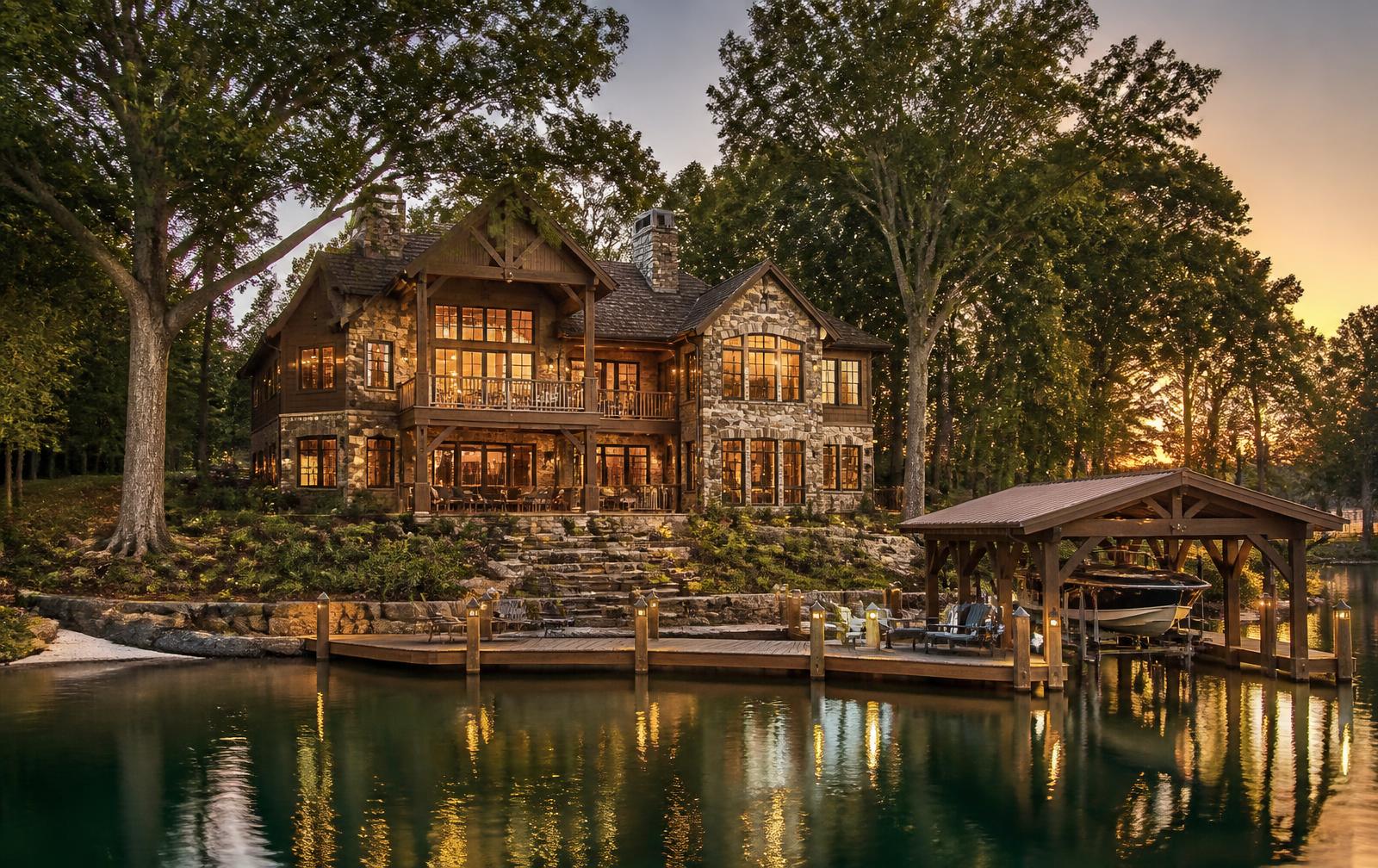
The Peninsula occupies a broad peninsula reaching into Lake Norman, which means its shoreline is not one uniform product. Walk it and you find at least four distinct conditions, each priced differently and each suited to a different owner.
- Main-channel frontage. Long water views across open lake, generally the deepest water, and the most dramatic light. It also takes the most boat wake and wind.
- Point lots. Water on more than one exposure, wide view arcs, and usually the highest price per foot of shoreline. Wind and wake exposure is highest here too.
- Cove frontage. Calmer water, more privacy, easier on docks and shoreline. Depth varies more, and views are shorter.
- Shallow or narrow frontage. Water contact without the full waterfront experience — sometimes with dock limitations. These properties should be evaluated on their own terms rather than compared directly to deep-water lots.
Because the community's premier shoreline was largely built on years ago, the practical path to the best water is often an older home that is renovated rather than a new build. That is a different project than starting from a vacant interior lot — the renovation guide covers what that involves.
| Frontage type | Trade-offs |
|---|---|
| Main channel | Longest views and generally deepest water; most wake, wind, and sun exposure. |
| Point | Multiple exposures and the widest view arc; highest exposure and typically the highest premium. |
| Protected cove | Calm water, privacy, gentler on docks and shoreline; shorter views, depth varies. |
| Narrow or shallow | Water access and lake proximity; dock options may be constrained — verify before purchase. |
Water depth and drawdown
Lake Norman is a managed reservoir. Its surface level moves through the year and can drop meaningfully in drought conditions, which means the depth you see at the dock in May is not the depth you have in a dry autumn. This is the single most common surprise for buyers arriving from coastal or river waterfront.
Do not accept a depth figure from marketing material. Have depth read at the dock and along the approach lane by someone qualified — a dock contractor, a marine surveyor, or the seller's dock service provider — and match it against the draft of the boat you actually intend to keep, with the lake down rather than full.
Depth also affects lift selection, slip configuration, and whether a dock can be extended at all. Those questions belong in due diligence, not after closing.
Docks, permits, and what actually transfers
A dock on Lake Norman is a permitted structure on water and shoreline managed by the lake's utility operator under a shoreline management program, with additional county and community requirements layered on top. Ownership of the home does not by itself grant the right to build, enlarge, or reconfigure a dock.
What to confirm in writing before closing:
- The existing permit, its number, and the approved configuration.
- Whether the permit transfers on sale and what the transfer process requires.
- Whether the structure as built matches the structure as permitted.
- Condition of pilings, decking, roof, electrical, and lift hardware.
- Any community architectural review requirement for dock changes.
Where a home has no dock, treat a future dock as a possibility to be verified, never an assumption. Our waterfront and docks guide goes deeper on the process; the boating and lake access guide covers using the water once you are here.
Orientation, sun, and privacy
Orientation is free to evaluate and expensive to fix. West-facing frontage delivers sunset over the water and warm evening terraces, at the cost of harsh late-afternoon glare in summer. East-facing frontage gives quiet sunrise light and cooler evenings. South-facing shoreline gets the most consistent light through the day.
Privacy is a function of the opposite shore, not just your own lot. Stand at the dock and look across: how close is the far bank, how built up is it, and how much boat traffic passes between? Visit at two different times of day and, if possible, once on a summer weekend.
Shoreline condition and erosion
Shoreline stabilization — riprap, seawall, or vegetated bank — is part of the asset. Failing stabilization is expensive, is regulated, and can take time to permit and repair. Look for undercut banks, exposed roots, slumping, or displaced rock, and ask when the shoreline was last worked on.
Vegetation matters too. Mature trees along the bank stabilize soil and provide privacy, and their removal is often restricted. Do not plan a view-clearing project until you have confirmed what is permitted by both the shoreline program and the community's architectural review process.
Reading Lake Norman waterfront listings
Search results for Lake Norman waterfront homes for sale mix several very different products under one label: main-channel estates, cove homes, interior-water frontage, and homes with a water view but no shoreline at all. Before comparing prices, establish which of those you are actually looking at.
- "Waterfront" is not "deep water." Frontage says nothing about usable depth at the dock or on the approach.
- "Dock permitted" is not "dock transferable." Confirm the permit, its holder, and its current configuration with the shoreline management authority.
- Photographs are taken at full pond. Ask what the same shoreline looks like at seasonal drawdown.
- Frontage footage is not frontage quality. A short, deep, well-oriented shoreline can outperform a long, shallow, exposed one.
- Price per square foot misleads on the water. Land and frontage carry the value; the house is the smaller variable.
This site does not publish listings or an IDX feed, by design. It exists to explain what the listings mean so that when you do look at inventory — with whichever agent you choose — you are reading it correctly.
| Listing says | What to confirm |
|---|---|
| Waterfront | Type of frontage: main channel, cove, or interior water. |
| Deep water | Measured depth at the dock and on the approach, at drawdown. |
| Dock / boat slip | Permit status, configuration, and whether it transfers. |
| Private shoreline | Where the property line actually meets the water. |
| Big water views | Orientation, afternoon sun, and boat traffic exposure. |
Resale considerations
The attributes that make a waterfront home easy to buy also make it easy to sell: usable depth, a permitted dock in good condition, a protected but open view, a gentle walk from house to water, and a lake-facing elevation that has been updated in the current decade.
The attributes that slow a sale are equally consistent: steep or long descents to the dock, unresolved permit questions, shallow approaches, deferred shoreline work, and interiors that turn their back on the view. None of these are fatal, but each should be priced honestly at purchase.
For how waterfront sits inside the broader community market, see Peninsula home values and the buying guide.
Frequently Asked
Waterfront questions answered
Are there waterfront homes at The Peninsula?
+
Yes. A significant share of the community's roughly 1,350 residences sit on Lake Norman frontage, spread across main-channel points, protected coves, and shorter shoreline segments on interior water. The remainder are golf-frontage or interior homes with no private shoreline.
Do waterfront homes at The Peninsula have private docks?
+
Many do, but a private dock is never automatic. Dock structures on Lake Norman sit on land and water controlled by the lake's utility operator and are governed by its shoreline management program, plus county and community requirements. Confirm the existing permit, its transferability, and the structure's approved configuration for the specific property before you assume anything.
What is the difference between cove and main-channel waterfront here?
+
Coves are calmer, more private, and easier on docks and shoreline, but water depth can be shallower and views shorter. Main-channel frontage delivers long water views and typically deeper water, with more boat wake, wind exposure, and sun. Neither is universally better — it depends on how you use the water.
How much water depth do I need?
+
It depends on your boat's draft and lift, and on how far the lake draws down seasonally. Depth should be measured at the dock and at the approach, not assumed from a listing photo. A survey or a licensed dock contractor's reading is the only reliable source.
Is waterfront more expensive to maintain?
+
Generally yes. Docks, lifts, seawalls or riprap, exposed lake-facing exteriors, and landscaping all take more weather than an interior home. Budget for periodic dock hardware, staining, and shoreline inspection.
Does waterfront hold value better?
+
Shoreline is the scarcest asset in the community, and the premier frontage is largely built out. That scarcity has historically supported waterfront pricing, but no property is immune to market cycles and none of this should be read as an investment guarantee.
See the water before you see the house.
Arrange a private walk of the shoreline — depth, dock, orientation, and exposure — with someone who has evaluated it many times.
View Local Firms