Golf Course Homes
Golf course homes at The Peninsula
Fairway frontage is not one product. Hole position, lot geometry, elevation, and tree buffers change the experience — and the price — from one address to the next.
8 minute read · Independent editorial guide · Reviewed August 2026
What "on the course" actually means
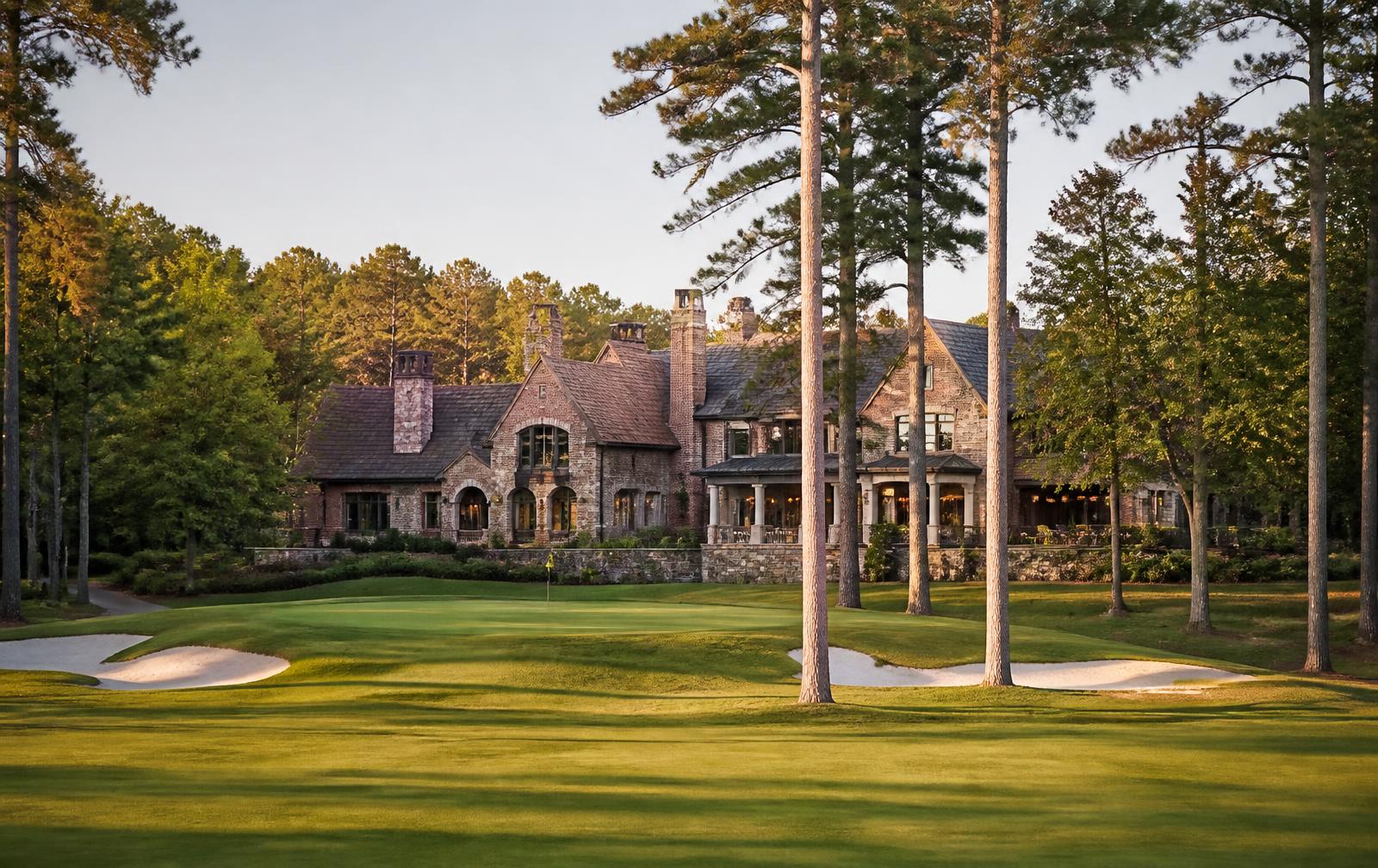
Listings use golf frontage loosely. In practice there are several very different conditions inside The Peninsula, and they should not be priced or compared as if they were the same thing.
- Direct fairway frontage — turf begins where the yard ends, with open sight lines down the hole.
- Green-side or tee-side — proximity to play with a different rhythm of traffic and a more contained view.
- Buffered adjacency — the course is there, but a tree line or grade separation sits between it and the house.
- Course-view without frontage — an elevated or angled view across the course from a lot that does not touch it.
Ask which condition applies, then confirm it standing in the back yard rather than reading it in a description.
| Lot condition | Trade-offs |
|---|---|
| Direct fairway | Longest open views and strongest golf identity; most exposure to play and passing carts. |
| Green-side / tee-side | Contained, framed views and concentrated activity at predictable times. |
| Buffered adjacency | Green space and quiet with more privacy; less visual connection to the course. |
| Course view only | The vista without the traffic; view can be affected by mature plantings over time. |
Hole position and ball traffic
The best predictor of how often a ball reaches your property is where your lot sits relative to typical shot patterns. Right-side landing areas on a hole that plays left-to-right see the most stray traffic. Homes behind greens or well past landing zones see comparatively little.
Practical due diligence: walk the hole from the tee, ask the seller whether windows or roofing have been struck, and look for protective glazing or screening already in place. Sellers on active lines usually know their history, and disclosure norms make it a fair question.
Views, elevation, and orientation
Elevation is the difference between overlooking a fairway and sitting inside it. A lot raised a few feet above turf level gains a longer, more composed view and better drainage; a lot below grade gains privacy and loses vista.
Orientation matters as much as it does on the water. A west-facing rear elevation delivers evening light across the fairway and hot terraces in July; an east-facing rear gives soft morning light and shaded afternoons. Both are workable — but only one matches how you actually use outdoor space.
Privacy, landscaping, and outdoor living
Golf lots are inherently public along one edge. The usual remedy is layered planting — evergreen structure with deciduous layering — placed to screen sight lines without walling off the view that justified the premium in the first place.
Any planting, fencing, screening, terrace expansion, or pool project on a course-facing lot is likely to require community architectural review. Confirm the current process and any course-frontage standards before you design, not after. The renovation guide covers how that review typically shapes outdoor projects.
Membership is separate from ownership
This is the most common misunderstanding about golf communities generally and it deserves a direct statement: at The Peninsula, purchasing a home — including a home directly on the course — does not automatically confer membership in The Peninsula Club. The club is a separate private organization with its own membership categories, application process, dues, and availability, and those structures can change.
If access to golf, racquet, pool, or dining facilities is part of why you are buying, verify current membership availability and terms with the club directly, in writing, before you go under contract. Read more context in the club and membership overview.
Lake Norman golf communities, compared
Buyers searching for Lake Norman golf communities are usually weighing a short list of private and semi-private neighbourhoods spread around the reservoir and its inland edges. They are not interchangeable, and the differences that matter are structural rather than cosmetic.
- Lakefront golf communities — the course and the water occupy the same property, so a single neighbourhood can offer fairway lots, deep-water lots, and interior lots at very different price points. The Peninsula is in this category.
- Inland golf communities — the golf is the organising amenity and the lake is a short drive away. Pricing tends to sit lower per square foot and the daily rhythm is quieter.
- Newer masterplans — more consistent architecture and newer infrastructure, generally with younger tree canopy and fewer mature lots.
The practical question is not which community is best but which trade you want to make: water access on top of golf, or more house and land for the money without a private shoreline. Our Peninsula and River Run comparison works through that trade in detail, and the Peninsula and The Point comparison covers the two premier lakefront options.
Verify course status, membership categories, and any waiting list with each club directly. Availability and structure change, and community marketing material is not a substitute for what the club confirms in writing.
| What to compare | Why it decides the outcome |
|---|---|
| Water access | Whether private docks exist at all, and whether the lot you want has one. |
| Membership structure | Bundled, optional, capped, or waitlisted — this changes the true annual cost. |
| Course condition and design | Recent renovation work, drainage, and routing quality outlast marketing copy. |
| Lot maturity | Established canopy and grading versus newer, more uniform streetscapes. |
| Association scope | What dues actually cover, and what remains the owner's responsibility. |
Resale considerations
Golf frontage sells on permanence. The open space behind the house cannot be built on, the sight lines are protected, and the setting reads as larger than the lot. Buyers pay for that.
What softens resale is predictable: heavy ball traffic, a view compromised by overgrown screening, a rear elevation that ignores the course, or a grade that makes outdoor living awkward. Each is worth pricing at purchase and, where possible, correcting during ownership.
Frequently Asked
Golf home questions answered
Are there golf course homes at The Peninsula?
+
Yes. A number of residences sit on or near the fairways of the community's 18-hole championship course, with lot conditions ranging from open fairway frontage to homes separated from play by mature tree buffers.
Does owning a golf course home include club membership?
+
No. The Peninsula Club is a separate private club with its own membership categories, application process, and dues. Owning a home on the course — or anywhere in the community — does not automatically make you a member. Confirm current membership structure directly with the club.
Do golf course homes cost more?
+
Golf frontage generally carries a premium over comparable interior homes, though it typically prices below equivalent deep-water frontage in the same community. Views, hole position, and privacy vary widely between golf lots.
Are errant golf balls a real issue?
+
It depends entirely on hole position and lot geometry. Homes along the landing area of a dogleg see more traffic than homes behind a green or beyond a tree line. Walk the hole and ask the seller directly about window or roof strikes.
Can I see the course from inside the home?
+
Some golf homes are designed around the view; others sit below grade or behind planting and see very little of it. View is a per-property question, not a category assumption.
What about maintenance noise and irrigation?
+
Course maintenance typically begins early. Mowing, blowers, and irrigation cycles are part of living on a fairway. Most owners consider it a fair trade for the green space; light sleepers should visit early in the morning before committing.
What are the Lake Norman golf communities?
+
Lake Norman is served by a small group of private and semi-private golf communities, split between lakefront communities where golf and water share the same property and inland communities where golf is the primary amenity. The Peninsula is in the first category. Course status, membership categories, and availability change, so confirm current details with each club directly.
Is The Peninsula golf course open to the public?
+
The Peninsula Club operates a private course. Access follows membership rather than home ownership, and guest play is governed by the club's own policy. Confirm current access rules with the club.
Walk the hole before you tour the house.
Position, elevation, exposure, and what each course-facing lot actually lives like — questions for the local firms below.
View Local Firms