Living Here
Living in The Peninsula at Lake Norman
Not the brochure version — the texture of a week here: where residents actually go, what the seasons do to the lake, how errands work, and what surprises people who move in.
10 minute read · Independent editorial guide · Reviewed August 2026
The character of the place
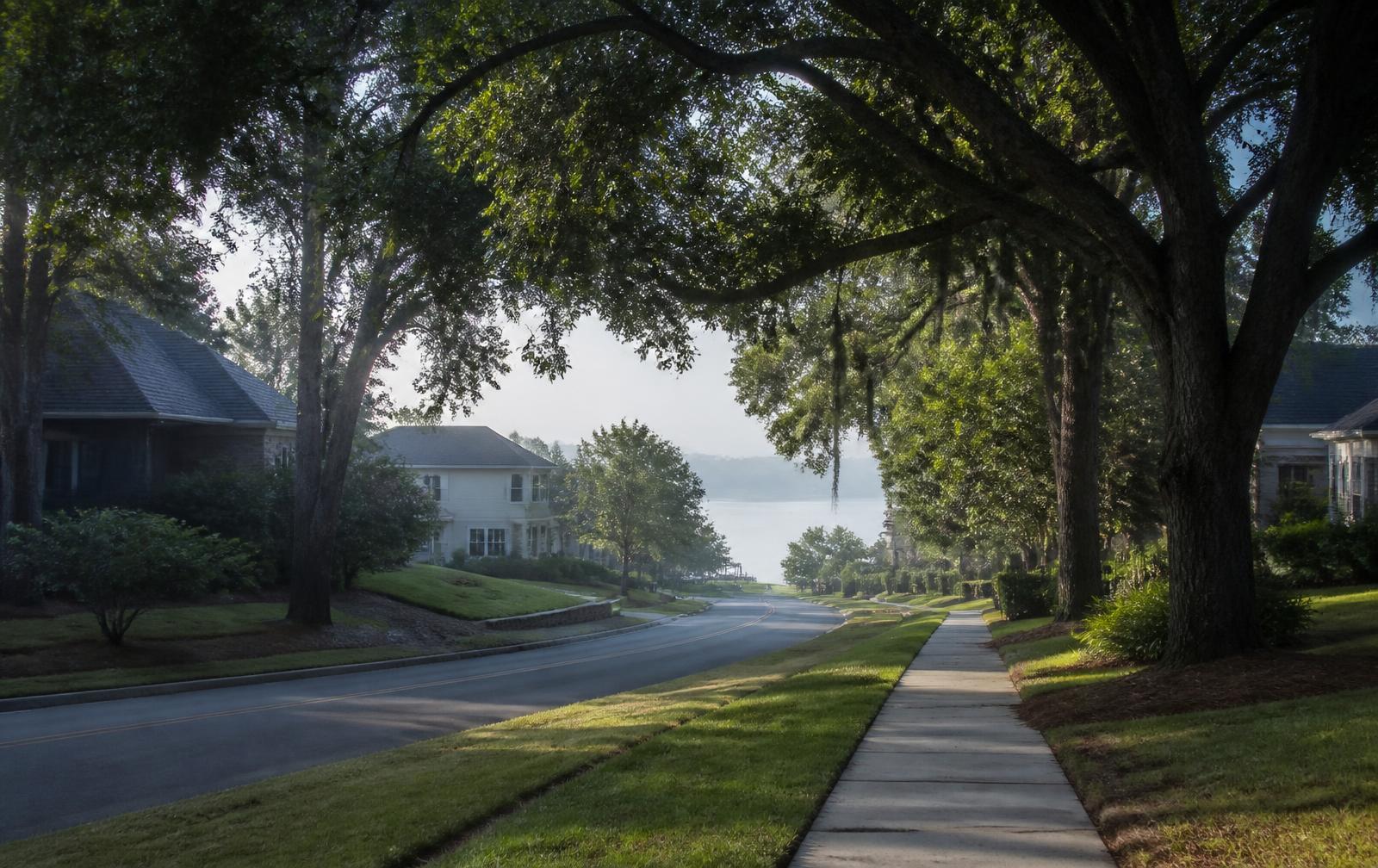
The Peninsula reads quieter than its size suggests. Because the community sits on a peninsula, almost no one drives through it on the way to somewhere else — traffic is residents, guests, and service vehicles. The hardwood canopy is mature, the lots are established, and the landscaping has had decades to fill in.
Founded in the mid-1990s, it is old enough to have multi-generational families and long-tenured owners, and active enough that homes turn over, get renovated, and occasionally get rebuilt. That mix — settled but not static — is the defining quality residents cite.
The shape of a week
Weekday mornings are school runs and commutes toward I-77 or into Cornelius and Huntersville. Mid-mornings belong to the racquet courts and the golf course. Afternoons are quiet. Evenings, especially from spring through October, move to the water — a short cruise, a dock hour, or dinner on a terrace.
Weekends bifurcate. Boating households leave the dock early and come back late; club households pass through the clubhouse more than once a day; and a substantial group does neither, using the community simply as a quiet, well-kept place to live near the water. All three patterns are normal here.
The four seasons on the lake
| Season | What it's like |
|---|---|
| Spring | Early and green. The lake warms slowly, docks come back into service, and the golf calendar restarts. |
| Summer | Warm and humid. Peak boat traffic on weekends, early tee times, and evening life on the water. |
| Autumn | The season residents name first. Long mild stretches, low humidity, quiet water, and the best light of the year. |
| Winter | Short and mild by national standards, with occasional cold snaps and infrequent snow. The lake goes still and the community goes indoors. |
One practical note for newcomers: the lake is a managed reservoir, so its level moves seasonally and can drop notably in dry years. That affects dock use more than it affects views.
Errands, shopping, and getting around
Everyday life is served locally: groceries, pharmacies, hardware, medical offices, and casual dining are all within a short drive in Cornelius and neighboring Huntersville. Birkdale Village in Huntersville is the nearest concentrated shopping and dining district, and downtown Davidson supplies the small-town main-street version of the same errand.
Anything specialized — major medical, airport, uptown offices, big-ticket retail — is a Charlotte trip down I-77. See the location and distances page for how the geography connects, and the restaurants and shopping guide for where residents actually go.
Housing variety and who lives here
The community is more varied than its reputation. Deep-water estates get the photographs, but a large share of homes are golf-frontage or interior residences on established lots, and those are where most families actually live. Architectural character ranges from 1990s traditional brick and stone through transitional renovations to a smaller number of modern rebuilds — see Peninsula architecture.
Households skew toward families and established professionals, with a meaningful group of long-term owners who have moved within the community more than once. Relocating buyers are a steady presence; the relocation guide is written for them.
What surprises new residents
- Club membership is a separate decision. Buying a home does not include it, and not every neighbor is a member.
- Exterior projects go through review. Paint, roofing, landscaping, fencing, and docks generally require community architectural approval.
- The lake level moves. Dock planning has to account for drawdown, not just full pool.
- Waterfront upkeep is real work. Docks, lifts, and lake-facing exteriors weather faster than the rest of the house.
- Distances are short but not walkable. Most errands are a five-to-fifteen-minute drive rather than a stroll.
None of these are drawbacks so much as adjustments. Knowing them before you move is the difference between a smooth first year and a frustrating one.
Frequently Asked
Living here, answered
What is it like living in The Peninsula?
+
Day to day it reads as a quiet, mature, low-traffic residential community organized around water and green space, with an optional private club at its center. Most trips off the peninsula are short — everyday shopping, dining, and I-77 access are all within a few miles in Cornelius and Huntersville.
Is The Peninsula gated?
+
The Peninsula is a private, deed-restricted community with security patrols rather than a single universally gated entry. Access arrangements can change; confirm current specifics with the applicable association.
Is it a good community for full-time living?
+
Yes. Unlike some lake communities that skew seasonal, The Peninsula has a substantial full-time resident base, including families and long-tenured owners, which is what sustains its year-round social and school-year rhythm.
Can you walk or bike within the community?
+
The internal street network is residential and low-speed, and walking and cycling are common. Sidewalk coverage varies by street and era of development, so check the specific enclave you are considering.
Do you need a boat to enjoy living here?
+
No. Plenty of residents never own one. The water shapes the setting regardless, and the club, racquet program, and social calendar are the center of daily life for many households.
What are the seasons like?
+
Piedmont North Carolina: warm, humid summers with the lake in constant use; long, mild autumns that are widely considered the best season here; short winters with occasional cold snaps and infrequent snow; and an early, green spring.
Spend a day here before you decide.
Schools, water, club, errands, and the drive you would make every morning — the local firms below live it daily.
View Local Firms